

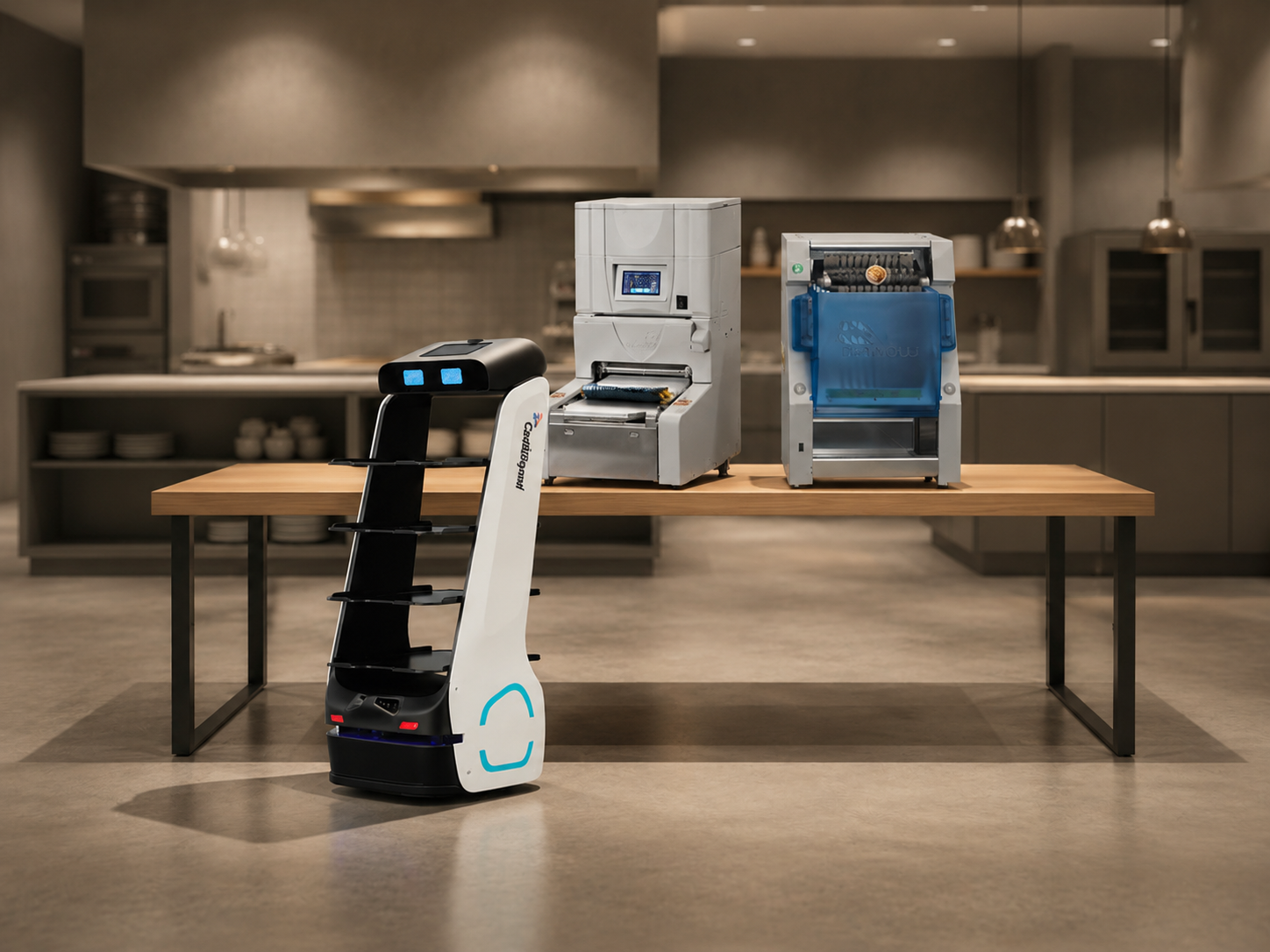
Restaurant automation can help reduce repetitive work, improve consistency, and support smoother daily operations. But not every restaurant needs the same type of equipment. The right choice depends on your menu, kitchen workflow, service style, staff challenges, and the tasks that slow your team down the most.
This guide explains how to choose the right restaurant automation equipment for your operation, from cooking robots and food prep machines to serving robots and commercial kitchen automation tools.
The best way to choose automation equipment is not to start with the most advanced machine. Start with the most repetitive or stressful part of your operation.
For some restaurants, the biggest issue is food preparation. For others, it may be staff walking back and forth between the kitchen and dining room. Some businesses struggle with consistency, while others need faster output during lunch rushes, catering orders, or high volume prep hours.
The right automation solution should solve a real workflow problem. It should help your team work faster, more consistently, or with less repetitive manual effort.
Restaurant automation works best when each solution is matched to a specific job. A serving robot will not solve a food prep bottleneck. A roll cutting machine will not reduce walking distance in the dining room. The goal is to identify the task that creates the most pressure and choose the solution that supports that exact workflow.
| Operation Area | Common Problem | Solution to Consider |
|---|---|---|
| Food Prep | Repeated manual prep takes too much time during busy hours | Cooking robots, roll makers, rice sheet makers, cutters, and prep machines |
| Service Flow | Staff spend too much time walking between the kitchen and tables | Restaurant serving robots and food delivery robots |
| Consistency | Food size, shape, portion, or presentation changes by staff member | Commercial food prep machines and portioning equipment |
| High Volume Output | Production slows down during catering, lunch rushes, or prepared food schedules | High volume kitchen automation solutions |
| Self Service Concepts | Customers need fast and simple access to prepared items or hot food | Ramen cookers and self service restaurant automation tools |
Different automation categories support different parts of a restaurant. Before choosing a machine, think about how it will fit into your current workflow and which task it will improve most.
Explore the main types of automation solutions and where they fit in restaurant operations.

Best for restaurants that need help with repetitive kitchen tasks such as roll making, rice sheet making, roll cutting, sushi rice forming, and other repeatable prep work.
Explore cooking robots
Best for restaurants with long service routes, many tables, or peak hour pressure where staff spend too much time carrying food between the kitchen and dining area.
Explore serving robots
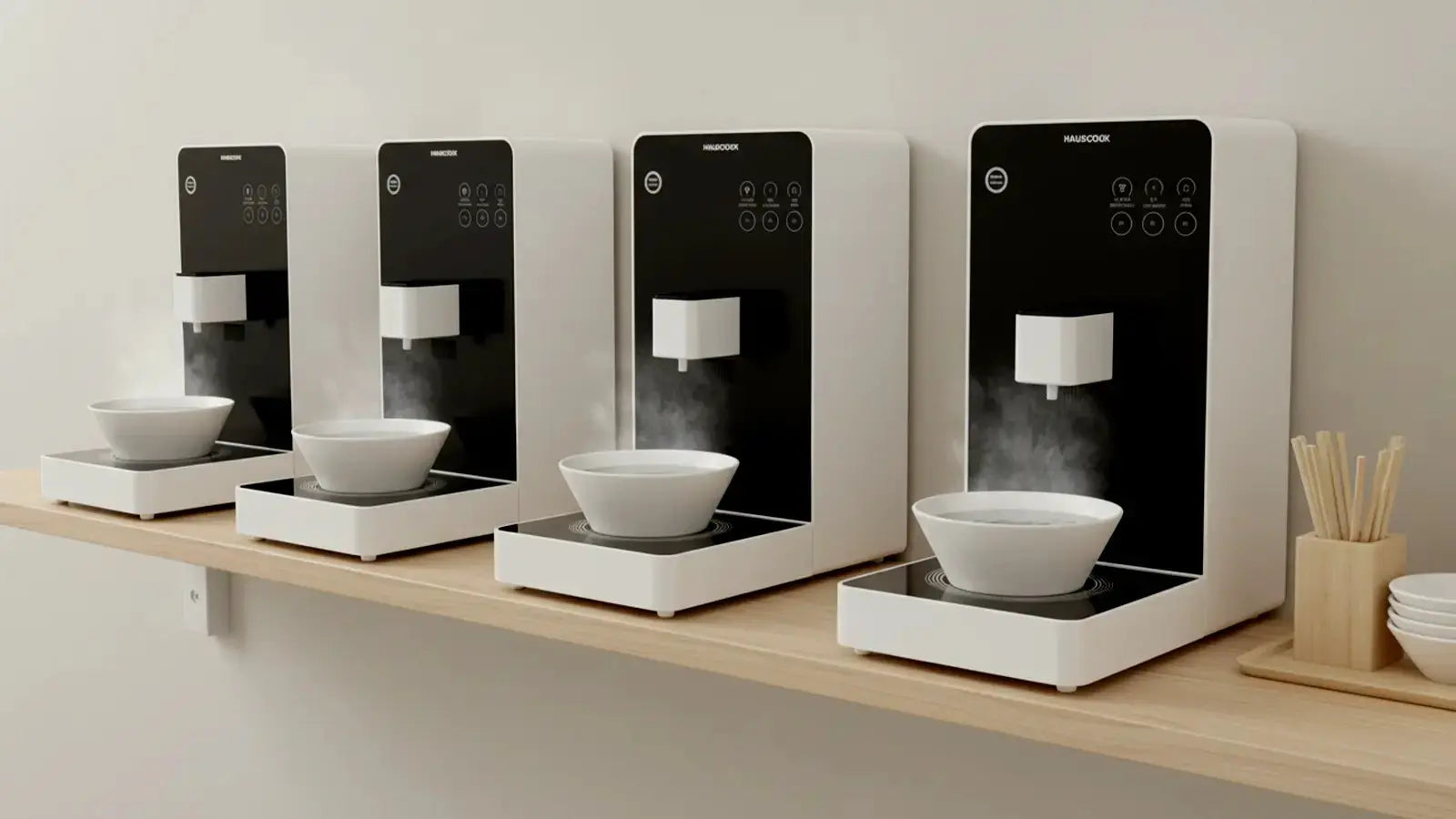
Best for food courts, campuses, convenience style concepts, and restaurants that want a faster or more standardized hot noodle service workflow.
Explore ramen cookers
Best for businesses that want to combine food prep, service support, and workflow improvement into a broader restaurant automation setup.
View all solutionsIf your kitchen spends too much time preparing the same items, food prep automation may be the first place to start. This is especially true for restaurants that make kimbap, sushi rolls, California rolls, sushi rice portions, or prepared food packs in high volume.
Equipment such as roll makers, rice sheet makers, roll cutters, and sushi rice ball machines can help reduce repetitive prep work and support more consistent output across different shifts.
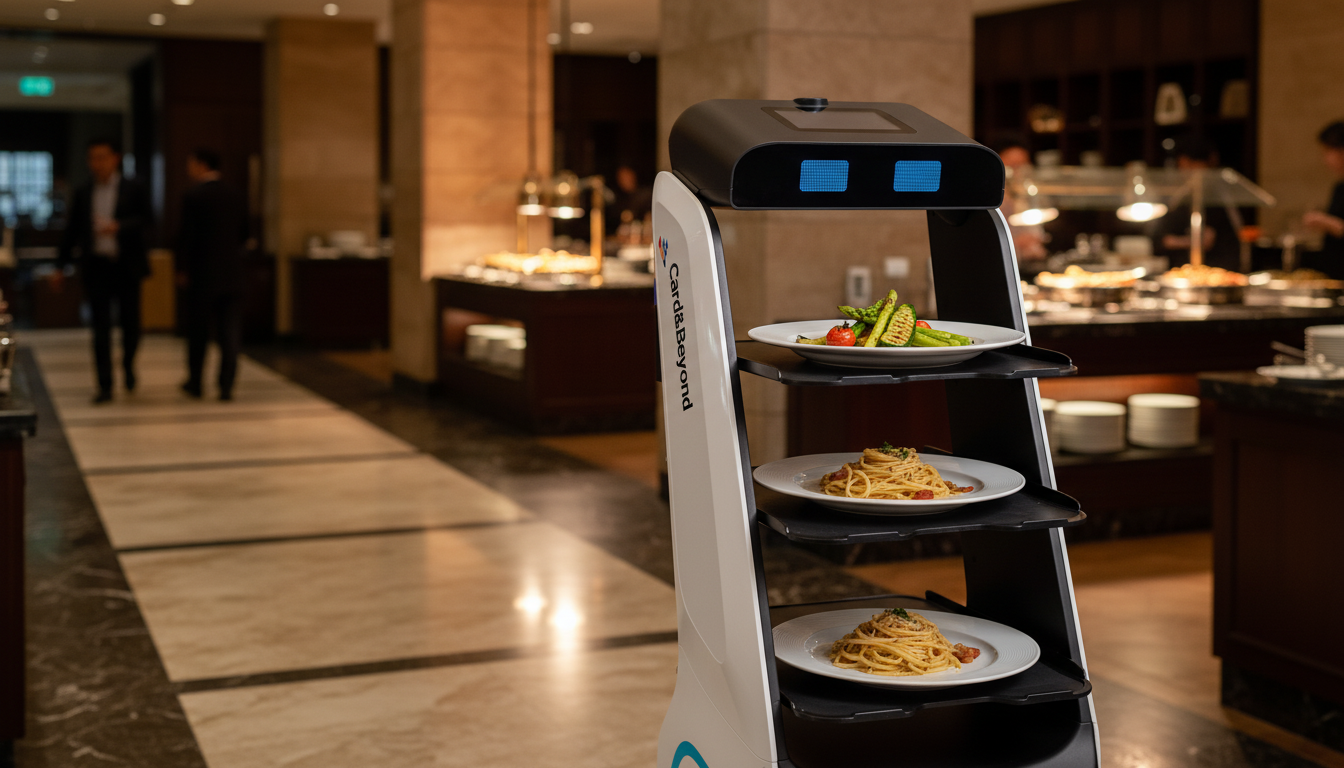
If staff are constantly walking between the kitchen and dining room, a serving robot may support smoother service. Serving robots are useful in restaurants with long routes, many tables, large dining rooms, buffet service, hotel dining, Korean BBQ, hot pot, and busy casual dining spaces.
The goal is not to replace staff. The goal is to reduce repetitive carrying and walking so the team can focus more on guests, table management, and service quality.
Many restaurant tasks depend on staff skill and repetition. Rice thickness, roll shape, cut size, food portion, and presentation can change depending on the employee or the shift. Automation equipment can help standardize repeatable steps and make training easier.
For high volume kitchens, consistency is not just about appearance. It also affects speed, waste control, portion management, customer experience, and staff training.
Before choosing restaurant automation equipment, review your current workflow and space. The best machine is not always the largest or most expensive one. It is the one that fits your menu, staff, layout, and daily production needs.
When evaluating restaurant automation equipment, price is only one part of the decision. A better question is how the equipment changes your workflow. Does it reduce repetitive motion? Does it help staff work faster? Does it make training easier? Does it help maintain quality during busy hours?
The most useful equipment usually solves a daily operational problem that happens again and again. When automation is matched to the right task, it can support a more stable, scalable, and easier to manage restaurant operation.
Start with one clear problem. Choose the solution that directly supports that workflow. Then build automation step by step as your operation grows.
What is restaurant automation equipment?
Restaurant automation equipment includes machines and robots that help support repetitive tasks in food preparation, kitchen workflow, dining room service, and commercial food operations.
What type of automation solution should my restaurant choose first?
Start with the task that creates the biggest bottleneck. If food prep is slow, consider cooking robots or prep machines. If service routes are long, consider serving robots. If consistency is the issue, consider portioning or food prep equipment.
Does restaurant automation replace staff?
No. Most restaurant automation equipment is designed to support staff by reducing repetitive work, improving consistency, and making daily operations easier to manage.
Is automation only for large restaurants?
No. Small and mid sized restaurants can also benefit from automation if they repeat the same tasks often or struggle with staffing, speed, consistency, or workflow pressure.
What should I check before installing restaurant automation equipment?
Check your menu, production volume, available space, electrical requirements, water or drainage needs, staff workflow, and where the equipment will be used during daily service.
Can restaurant automation help with labor shortage?
Automation can help reduce repetitive manual tasks and support staff efficiency, especially during busy hours. It does not remove the need for staff, but it can help your team focus on higher value work.
Tell us about your menu, workflow, and service needs. We’ll help you find the right automation solution for your restaurant.
Share:
Commercial Ramen & Noodle Cooker Guide for K-Food Restaurants